
Guide
CBD Oil vs Tincture: What’s the Difference?
Sep
Intro
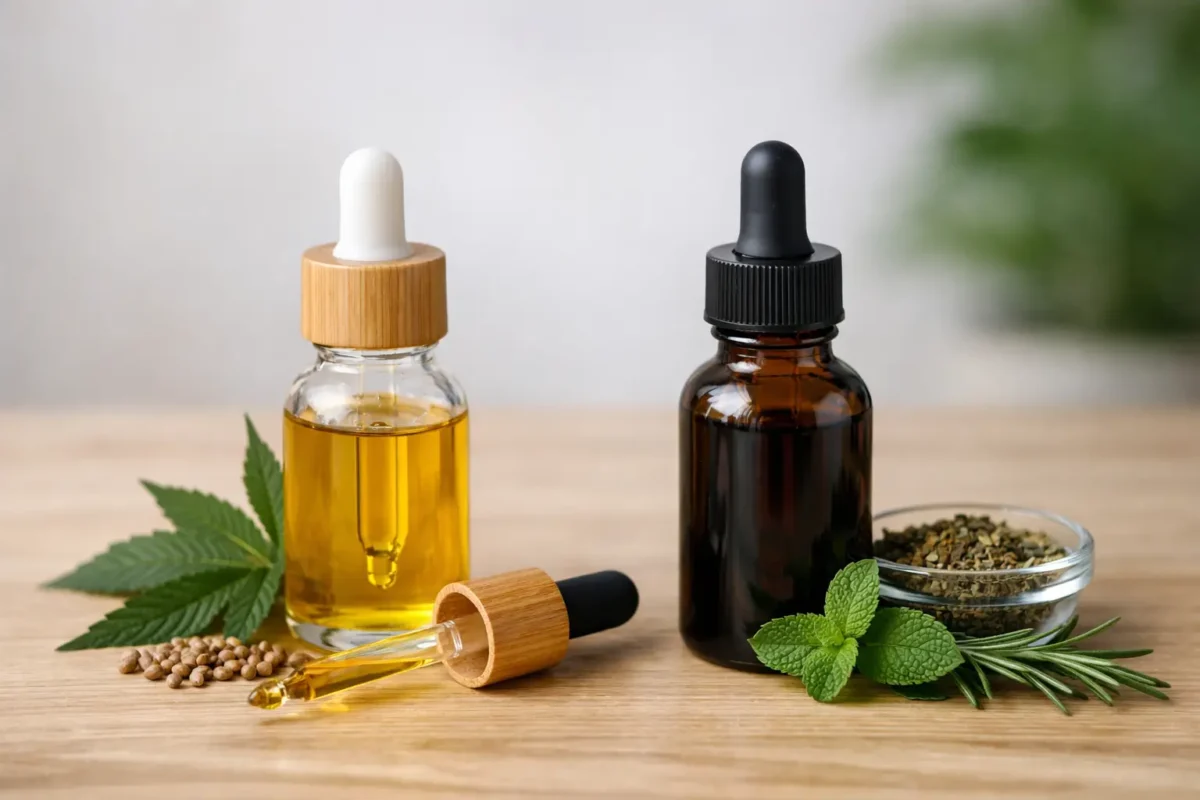
The CBD oil vs tincture question comes down to the liquid carrying the CBD. CBD oil uses an oil base, while a tincture may use oil, alcohol, glycerin, or another liquid. Check the ingredient panel first – it tells you more than the product name alone.
Key Takeaways
- CBD oil is usually CBD extract blended with a carrier oil such as MCT, hemp seed, or olive oil.
- A CBD tincture is a broader label. It can be oil-based, alcohol-based, glycerin-based, or mixed with flavoring ingredients.
- The bottle name is not enough. Confirm the cannabinoid amount, serving size, carrier, and batch testing before choosing.
- Flavor, texture, and dosing convenience are the practical differences most buyers notice day to day.
What Is CBD Oil?
CBD oil generally contains a hemp-derived CBD extract suspended in a fatty carrier oil. MCT oil is common because it has a light taste and pours easily. Hemp seed and olive oil are also used, though both have more noticeable flavor.
The word “oil” should be literal. If the formula uses an oil as its main carrier, CBD oil is an accurate description. A dropper bottle is the most common format, but capsules and softgels can also contain CBD oil.
CBD Oil vs Tincture: The Direct Answer
All CBD oils may be sold as tinctures, but not every CBD tincture is strictly an oil. In modern retail, brands often use the two names interchangeably. That creates confusion when shoppers expect an alcohol tincture and receive an MCT-oil formula instead.
For a fast comparison, look past the front label. The supplement facts panel and ingredient list show whether you are getting CBD in oil, alcohol, vegetable glycerin, or a combination.
CBD Oil vs Tincture Comparison Table
| Feature | CBD Oil | CBD Tincture | |—|—|—| | Typical base | MCT, hemp seed, or olive oil | Oil, alcohol, glycerin, or mixed base | | Taste | Often mild to earthy | Can be earthy, sweet, botanical, or sharp | | Texture | Smooth and oily | Depends on the carrier | | Label use | More specific | Broader marketing term | | Best buying check | Carrier oil and CBD per mL | Carrier, alcohol content, and CBD per mL |
How an Oil-Based Formula Feels to Use
Oil-based CBD products are often the easiest choice for shoppers who want a simple ingredient list. They usually have a thicker texture than alcohol tinctures and can leave a light coating in the mouth.
Many users place a measured serving under the tongue, hold it briefly, then swallow. Others mix it into food or drinks, although that can make precise serving control harder. Use the marked dropper, not guesswork.
CTA: Compare the carrier oil and milligrams per bottle before you add any CBD liquid to your routine. A lower sticker price does not always mean a lower cost per milligram.
How Alcohol and Glycerin Tinctures Differ
Traditional botanical tinctures often use alcohol to extract and preserve plant compounds. An alcohol-based CBD tincture may have a thinner consistency and a stronger, sharper taste. It is not the right fit for everyone, especially people avoiding alcohol.
Glycerin-based tinctures are usually sweeter and alcohol-free. They can appeal to shoppers who dislike oil texture, but the formula may contain more added ingredients. Read the panel if you prefer a minimal product.
The Carrier Oil Changes the Experience
The CBD amount may be identical in two bottles, but the carrier changes taste, dietary fit, and how the product blends into a routine. MCT oil is commonly chosen for its neutral profile. Hemp seed oil has a nuttier flavor and may appeal to buyers who want a hemp-forward formula.
Olive oil can be a familiar option, but its stronger taste is not for everyone. If you have food allergies, sensitivities, or a restricted diet, check every inactive ingredient instead of assuming a hemp product is automatically compatible.
Full-Spectrum, Broad-Spectrum, and Isolate
The extract type is separate from the oil-versus-tincture distinction. A full-spectrum formula can contain CBD plus other naturally occurring hemp compounds, including trace THC within applicable legal limits. Broad-spectrum CBD aims to include multiple hemp compounds while removing THC. CBD isolate contains CBD without the wider cannabinoid profile.
Do not treat broad-spectrum as a guarantee of zero risk on a drug test. Product quality, individual metabolism, and testing thresholds vary. Anyone subject to workplace, athletic, legal, or medical testing should use extra caution and seek qualified advice.
Read the Label in 30 Seconds
A useful CBD label makes comparison easy. Find the total CBD in the bottle, then divide it by the stated number of servings. For example, a 1,500 mg bottle with 30 servings provides 50 mg per serving.
Also check bottle volume. Two products can both list 1,000 mg CBD, but a smaller bottle is more concentrated per milliliter. Concentration matters if you want smaller measured servings or need to avoid using a large volume of liquid.
Look for a current batch or lot number and access to an independent certificate of analysis. The report should match the product’s cannabinoid content and show screening for relevant contaminants.
CTA: Build your comparison around CBD per serving, CBD per mL, and the carrier – not marketing words like premium or extra strength.
Quick Product-Format Quiz
Start here: Do you want an oil-based formula with few ingredients?
- If yes, choose a clearly labeled CBD oil with MCT, hemp seed, or olive oil as the carrier.
- If no, ask whether you want to avoid alcohol. If yes, consider an alcohol-free glycerin or oil-based tincture.
- If alcohol is acceptable and you prefer a thinner liquid, an alcohol-based tincture may suit your preference.
- If taste is the dealbreaker, look for a flavored option, then verify whether flavoring adds sugar, sweeteners, or allergens.
Next question: Are you trying to avoid THC? If yes, review the extract type and third-party test results carefully. Broad-spectrum or isolate products may be more appropriate than full-spectrum formulas, but no label replaces careful verification.
When CBD Oil Is Usually the Better Pick
Choose CBD oil when you want a straightforward, oil-carrier product and do not mind a slightly oily texture. It is also a practical option for buyers who prefer MCT or hemp seed oil and want to compare products by concentration.
Oil formulas are often easier to find in larger bottle sizes and a wide range of strengths. That helps regular users calculate cost per serving, but it does not mean the highest milligram count is automatically the best choice.
When a Tincture May Be the Better Pick
Choose a tincture when you care more about the carrier options than the category name. An alcohol-free glycerin tincture can be useful for people who dislike oil. An alcohol-based formula may appeal to those seeking a traditional herbal-tincture style.
The trade-off is complexity. Tinctures can include flavorings, preservatives, botanical extracts, and sweeteners. That is not inherently bad, but it makes label reading more important.
Start Low and Measure Carefully
CBD does not have one universal serving amount. Body size, individual sensitivity, product concentration, other medications, and intended use all affect the decision. Follow the manufacturer’s serving guidance and make changes gradually rather than taking a large amount on day one.
Keep a simple note of the date, serving amount, product, and how you feel. This is more useful than changing products and doses at the same time. If a product makes you feel unwell, stop using it and talk with a healthcare professional.
Safety Checks Before You Use CBD
CBD can interact with certain medications, including medicines processed by liver enzymes. Speak with a pharmacist or clinician before use if you take prescription medications, are pregnant or nursing, have liver concerns, or are managing an ongoing health condition.
Avoid driving or operating machinery until you know how a product affects you. Keep CBD products away from children and pets. Do not use CBD as a substitute for professional diagnosis or prescribed treatment.
Storage and Shelf Life
Keep CBD oil or tincture tightly closed in a cool, dark place. Heat, direct light, and air exposure can degrade flavor and product quality over time. A pantry or cabinet is often better than a sunny windowsill or hot car.
Check the expiration date and watch for major changes in smell, color, or texture. Natural separation can happen in oil formulas, so gentle shaking may be appropriate when the label directs it.
The Best Way to Compare Bottles
The right choice is rarely about whether a front label says oil or tincture. Choose the formula with a transparent carrier, clear CBD concentration, suitable extract type, and verified batch testing. Then select the taste and texture you will realistically use consistently.
CTA: Before making your final choice, put two labels side by side and calculate the CBD per serving. The better fit is the one you can measure confidently, tolerate comfortably, and verify clearly.