
Guide
How Long Does Cocaine Stay in Your System?
Sep
Intro
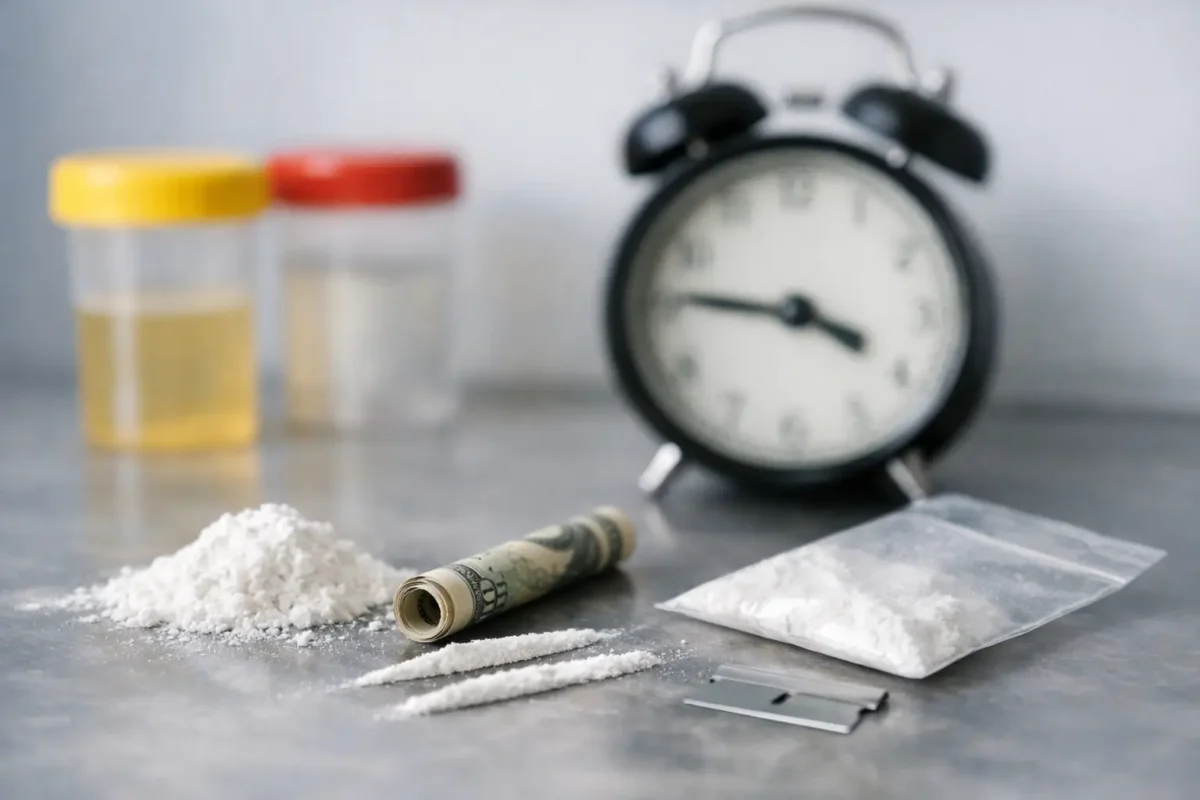
How long does cocaine stay in your system? For most people, cocaine is detectable for about 1-4 days in urine, while hair testing can show past exposure for up to 90 days. The exact window changes with the test, amount used, frequency, and individual metabolism.
Key Takeaways
- Urine testing is the most common method and usually detects cocaine metabolites for 1-4 days after occasional use.
- Frequent or heavy use can extend urine detection to a week or longer in some cases.
- A detection window is not the same as impairment. Effects can fade well before a test becomes negative.
- There is no reliable, safe shortcut that guarantees a negative drug test.
Quick Answer: Cocaine Detection Times
Cocaine itself leaves the bloodstream relatively quickly. Drug tests usually look for benzoylecgonine, the primary metabolite created as the body processes cocaine. That metabolite stays detectable longer than the drug’s noticeable effects.
| Test type | Typical detection window | What it generally measures | |—|—:|—| | Urine | 1-4 days | Benzoylecgonine and other metabolites | | Blood | About 12-48 hours | Recent cocaine use and metabolites | | Saliva | 1-2 days | Recent exposure | | Hair | Up to 90 days | Longer-term pattern of exposure |
These are broad estimates, not guarantees. Laboratory methods, test cutoffs, and individual health factors can shift the result.
Typical Timeline After One-Time Use
After a single use, cocaine’s immediate stimulant effects may last minutes to a few hours, depending on how it was taken. Metabolites can remain measurable much longer. A urine test may still be positive after the person no longer feels high, alert, or impaired.
Cocaine vs. Benzoylecgonine
The question is not only how long cocaine stays in the body. It is also which compound the test is designed to find.
Cocaine has a short half-life, often around an hour. Benzoylecgonine lasts longer and is the marker commonly used in workplace, legal, medical, and treatment testing. This is why a person may assume the drug is gone but still receive a positive urine result.
How Long Cocaine Stays in Urine
Urine testing is common because it is practical, comparatively inexpensive, and useful for identifying recent use. With occasional use, cocaine metabolites are often detectable for roughly 2-4 days. Some people may clear them sooner, while repeated use can extend the period considerably.
Heavy or regular use may lead to detectable metabolites for 7-10 days or more. That does not mean the person remains intoxicated for that period. It means the body is still eliminating byproducts of prior use.
How Long Cocaine Stays in Blood
Blood testing is more focused on recent use. Cocaine may be found in blood for around 12 hours, and metabolites may sometimes be measurable for up to one or two days.
Because blood collection is more invasive and has a shorter window, it is less common for routine workplace screening. It may be used in emergency care, accident investigations, or situations where recent exposure matters.
How Long Cocaine Stays in Saliva
Saliva, also called oral-fluid testing, generally detects cocaine for about 24-48 hours. The range can vary based on the collection method, oral contamination shortly after use, and the laboratory’s cutoff level.
Oral-fluid tests are useful when a shorter, more recent window is the goal. They do not offer a dependable way to calculate exactly when a result will turn negative.
How Long Cocaine Stays in Hair
Hair testing has the longest lookback period. A standard hair sample can show cocaine exposure for up to 90 days, depending on the length of hair tested. Hair usually does not show very recent use immediately because the hair must grow beyond the scalp before a sample can reflect exposure.
Hair tests are better at identifying a pattern of use than pinpointing a specific date. Results can also be affected by hair treatment, sample collection, and laboratory confirmation procedures.
What Changes Cocaine Detection Time?
No online chart can predict one person’s result with certainty. Detection depends on a mix of use patterns, body factors, and the test itself.
Dose and Frequency of Use
A larger amount generally produces more metabolites. Repeated use also creates a longer elimination period than a one-time exposure. This is the biggest practical difference between a possible 1-4 day urine window and a window that lasts a week or longer.
Metabolism, Hydration, and Health
Body size, liver function, kidney function, age, medications, and natural metabolic differences can all affect processing. Hydration can change how concentrated a urine sample appears, but it does not reliably remove cocaine metabolites from the body faster.
Test Sensitivity and Cutoff Levels
Tests use cutoff levels to determine a positive or negative result. Screening tests may be followed by a more specific confirmation test. A result near a cutoff can vary based on timing, specimen quality, and the method used by the laboratory.
Can You Speed Up Cocaine Clearance?
No detox drink, supplement, sauna session, or excessive water intake can guarantee a negative result. Products marketed as rapid cleanses are unreliable and may create new problems, including dehydration, electrolyte imbalance, or a diluted specimen that triggers retesting.
The only dependable variable is time without further use. Eat normally, rest, and drink fluids as you normally would. Do not attempt extreme methods to alter a test result.
A Quick Decision Quiz
Use this simple route to decide what matters most right now.
Are you having chest pain, trouble breathing, severe agitation, confusion, seizures, or a very fast heartbeat? Call 911 or seek emergency care now. Do not wait for symptoms to pass.
Are you worried about a scheduled drug test? Check the test type and follow the official instructions. Be truthful with a medical provider about prescriptions or health conditions, but do not rely on online detox claims.
Are you using more often than planned or feeling unable to stop? Contact a substance-use treatment provider, a local health service, or the SAMHSA National Helpline at 1-800-662-HELP (4357) for confidential support.
When Cocaine Use Needs Urgent Medical Care
Cocaine can sharply increase heart rate, blood pressure, body temperature, anxiety, and the risk of serious cardiac events. Emergency symptoms include chest pressure, fainting, severe headache, one-sided weakness, blue lips, hallucinations, or seizures.
Take the fast route: call 911 for severe symptoms. If you are with someone who may be overdosing, stay with them when safe to do so and tell responders what was taken. Clear information helps medical teams respond appropriately.
If You Have an Upcoming Drug Test
Start with the facts: identify whether the test is urine, saliva, blood, or hair, and confirm the collection date. Avoid further use, follow the testing instructions, and do not use tampering products or extreme fluid intake.
Choose accuracy over risky shortcuts. If the test is connected to medical care, tell the clinician about substance use so they can interpret symptoms and treatment decisions safely.
Mixing Cocaine With Other Substances
Mixing cocaine with alcohol, opioids, benzodiazepines, or other stimulants increases risk. Cocaine and alcohol can form cocaethylene in the body, a compound associated with added strain on the heart and liver. Combining stimulants can further raise the risk of overheating, panic, irregular heartbeat, and overdose.
Do not use alone if you are at risk of an emergency. The safest option is not to mix substances, especially when you do not know the actual contents or strength of a product.
Next Step
A detection estimate can answer a timing question, but it cannot tell you whether your body is safe. If cocaine use is causing health symptoms, legal stress, financial pressure, or difficulty stopping, make the direct call for medical or recovery support today. A clear plan is more useful than guessing at a test window.