
Guide
Hemp Product Regulations: What Buyers Need to Check
Sep
Intro
Hemp product regulations can decide whether a gummy, vape, tincture, or flower product is eligible for sale or shipment where you live. The fastest buyer check is simple: confirm THC information, review the lab report, and verify your state’s current rules before checkout.
Key Takeaways
- Federal hemp status does not guarantee state-level legality or shipping eligibility.
- A label claiming “hemp-derived” is not enough. Check cannabinoid content, batch details, and testing.
- Delta-9 THC, total THC, product format, and intended use can all change the legal picture.
- Retailers can restrict orders by location, age, and product category even when a product appears federally compliant.
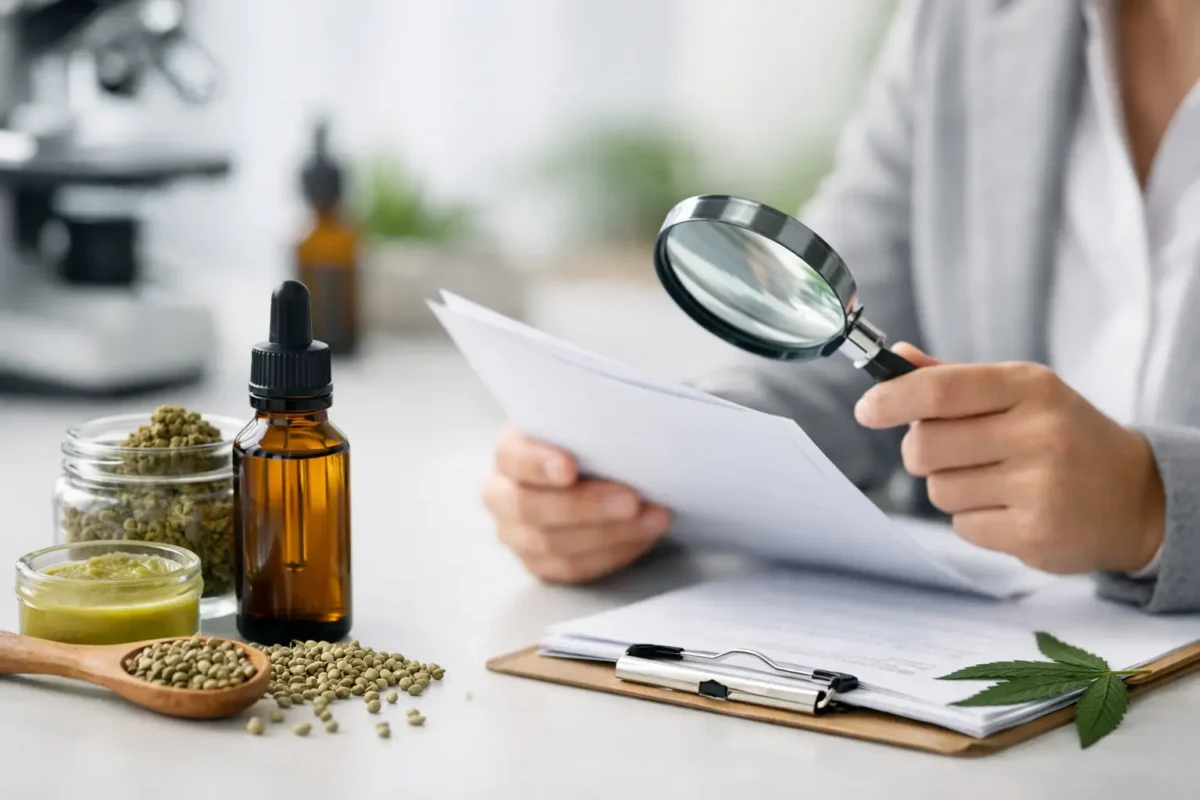
> Image placement brief: Use a horizontal, compressed JPEG under 100KB showing a close-up hemp product label beside a certificate of analysis, with readable fields highlighted: batch number, cannabinoid profile, and QR code.
The Federal Line: Hemp vs. Marijuana
At the federal level, hemp is generally defined by delta-9 THC concentration of no more than 0.3% on a dry-weight basis. Cannabis that exceeds that threshold may be treated differently under federal law. That basic distinction drives how many hemp-derived products are grown, tested, labeled, and distributed.
For buyers, the practical point is this: “hemp” is a regulatory category, not a guarantee that every product is unrestricted. A product’s formula, THC measurement, state destination, and retail policy all matter.
The 0.3% Delta-9 THC Test
The 0.3% figure is often printed on packaging, but it needs context. It is a concentration threshold, not a universal green light for every serving size, package size, or finished product. States may apply additional rules to hemp flower, ingestibles, vapes, or intoxicating cannabinoid products.
A compliant-looking label should identify the cannabinoid content clearly. If the label only says “proprietary hemp blend” without measurable cannabinoid information, treat that as a reason to pause.
Why Total THC Changes the Answer
For hemp cultivation and some compliance programs, total THC can matter alongside delta-9 THC. Total THC considers THCA, which can convert to delta-9 THC when heated. This is especially relevant for raw flower and products intended for smoking or vaping.
That difference explains why a hemp flower product can create more regulatory questions than a CBD topical. The product format changes what regulators, carriers, retailers, and buyers may need to evaluate.
State Rules Decide What Reaches Checkout
Federal definitions set a baseline, but state laws decide much of the real-world buying experience. One state may permit hemp-derived gummies with restrictions, while another limits intoxicating hemp products, imposes potency caps, requires specific labeling, or blocks certain categories entirely.
This is why we recommend checking destination eligibility before building an order. A product can be listed online yet unavailable for shipment to your address. That is compliance, not a pricing or inventory issue.
States That Restrict Intoxicating Hemp
State restrictions often focus on products formulated for intoxicating effects, including some delta-8 THC, delta-10 THC, THC-P, and high-potency hemp-derived delta-9 products. Rules can change through legislation, agency guidance, emergency rules, or court decisions.
Do not rely on an old social post or a package purchased in another state. Use the current rules for the delivery location, and expect stricter treatment for inhalables, edibles, and products with psychoactive cannabinoid blends.
Age and Retail Restrictions
Age rules vary. Some markets set 18+ requirements for certain hemp products, while others use 21+ standards for inhalable or intoxicating items. Retailers may apply a stricter age gate than local law requires.
You may also see restrictions on delivery methods, signature requirements, package quantity, or retail licensing. If a checkout system blocks an item, choosing a different flavor or size will not solve a location-based rule.
> Image placement brief: Use a horizontal, compressed JPEG under 100KB featuring a simple U.S. map graphic with color-coded state rule categories: permitted, restricted, and unavailable. Avoid legal claims on the graphic itself.
Product Labels That Deserve Attention
A good label makes comparison faster. Look for the product name, net quantity, cannabinoid amounts, ingredients, manufacturer or distributor details, lot or batch number, and a usable testing reference.
Missing information is a buying signal. If you cannot identify what is in the product, how much is present, or which batch it came from, there is no practical way to compare it against another option.
COAs: Useful, but Not a Permission Slip
A certificate of analysis, often called a COA, is a third-party lab document tied to a product batch. It can show cannabinoid potency and may include screens for contaminants such as pesticides, heavy metals, residual solvents, or microbial content.
Check that the batch number on the COA matches the package when possible. Also check the report date and laboratory details. A COA supports transparency, but it does not override a state restriction or make a product lawful in every destination.
Packaging and Claims
Be cautious with products making aggressive health or medical claims. Hemp-derived CBD products are not automatically approved treatments for pain, anxiety, sleep disorders, or other medical conditions. A product page should describe ingredients and cannabinoid content, not promise a diagnosis, cure, or guaranteed outcome.
Child-resistant packaging, serving guidance, and clear warnings are especially relevant for edibles. Keep all cannabinoid products away from children and pets.
Format Changes the Regulatory Risk
The same cannabinoid can face different rules depending on how it is sold. Regulators may treat a topical, tincture, beverage, gummy, cartridge, and pre-roll differently because exposure, dosage, packaging, and consumer risk differ.
| Product format | Common compliance focus | Buyer check before ordering | |—|—|—| | Gummies and drinks | Serving size, packaging, food rules, potency limits | Review mg per serving and destination rules | | Vapes and cartridges | Age gate, inhalable restrictions, ingredients | Confirm shipping eligibility and test results | | Flower and pre-rolls | Delta-9 and total THC testing | Check batch COA and local hemp flower rules | | Tinctures and topicals | Label accuracy and marketing claims | Review ingredients and intended use |
Inhalable Products
Vapes, cartridges, disposable devices, flower, and pre-rolls can face the tightest controls. Beyond cannabinoid laws, inhalables may be affected by nicotine, flavor, packaging, shipping, or age-verification requirements.
If you are comparing options, do not compare only by price. Compare cannabinoid amount, hardware type, ingredient disclosure, batch testing, and destination availability.
Edibles and Drinks
Edibles are easy to misread because the package total can be much higher than a single serving. A bag with 100 mg total may contain ten 10 mg pieces. Read both numbers before you decide what fits your tolerance and local rules.
Food and beverage categories can also face additional state oversight. That is why a hemp gummy allowed in one market may be restricted, reformulated, or unavailable elsewhere.
CBD Topicals and Tinctures
Non-intoxicating CBD topicals and tinctures are often simpler to compare, but the same basics apply. Look for cannabinoid quantity, full ingredients, a batch identifier, and a COA. Avoid assuming that “full spectrum” or “broad spectrum” has one universal legal meaning.
Full-spectrum products may contain trace cannabinoids, including THC. Broad-spectrum products are often marketed as THC-free, but the exact formula and testing results still matter.
> Image placement brief: Use a horizontal, compressed JPEG under 100KB showing four labeled product silhouettes: gummy, vape cartridge, tincture bottle, and pre-roll, with small compliance icons for age, label, lab test, and state rule check.
A Quick Buyer Quiz
Start with your product type. Are you considering a gummy, drink, vape, flower product, tincture, or topical? If it is an edible or inhalable, move to the stricter check: confirm your state permits that category and review the stated cannabinoid amount per serving.
Next, look at the label. Can you find the batch number and a matching COA? If yes, compare the tested cannabinoids to the package claim. If no, choose a product with clearer documentation.
Then ask one final question: Does the retailer confirm delivery eligibility for your state and age? If yes, proceed with the listed checkout requirements. If no, do not assume the order can be completed or delivered.
Compare the Product Before You Pay
A faster buying process starts with a short comparison. First, compare milligrams per serving, not only the headline package total. Next, compare cannabinoid type and formula. Finally, compare the lab report date and batch match.
For price-sensitive buyers, calculate cost per milligram only after confirming that the products are in the same category. A 1,000 mg CBD tincture and a 1,000 mg hemp-derived THC gummy package are not interchangeable products.
CTA: Check the product details first, then use the available filters to compare format, potency, and pack size without guessing.
What Retailers Can and Cannot Promise
A responsible retailer can provide product specifications, available lab documentation, age-gated access, and location-based checkout controls. We can also make category comparisons easier by showing potency, format, count, and current pricing in one place.
A retailer cannot promise that a product is legal for every buyer in every place, nor can a product label replace professional legal or medical advice. Rules change, and individual circumstances matter.
CTA: Before adding a hemp-derived item to your cart, confirm the shipping notice for your delivery location and review the product’s batch information.
Before You Add Hemp Products to an Order
Use this final screen before checkout: verify your age eligibility, destination rules, product format, cannabinoid amount, batch documentation, and package size. If you are combining products, review each item separately because a tincture, edible, and vape may have different restrictions.
Do not use cannabinoid products before driving, operating equipment, or mixing them with alcohol or medications without appropriate professional guidance. If you are pregnant, nursing, managing a medical condition, or taking prescriptions, speak with a qualified health professional first.
> Image placement brief: Use a horizontal, compressed JPEG under 100KB showing a clean checkout checklist graphic: age verified, state checked, COA reviewed, dose read, and shipping confirmed.
Keep the Cart Smart
The best hemp purchase is not the product with the loudest claim. It is the one with clear testing, understandable dosing, accurate labeling, and confirmed eligibility for your location. Check those points first, then compare the options that actually fit your order.
CTA: Build your order around verified product details, not assumptions, and review every item before you submit checkout.