
Guide
How Long Does Cocaine Stay in Urine? Facts
Sep
Intro
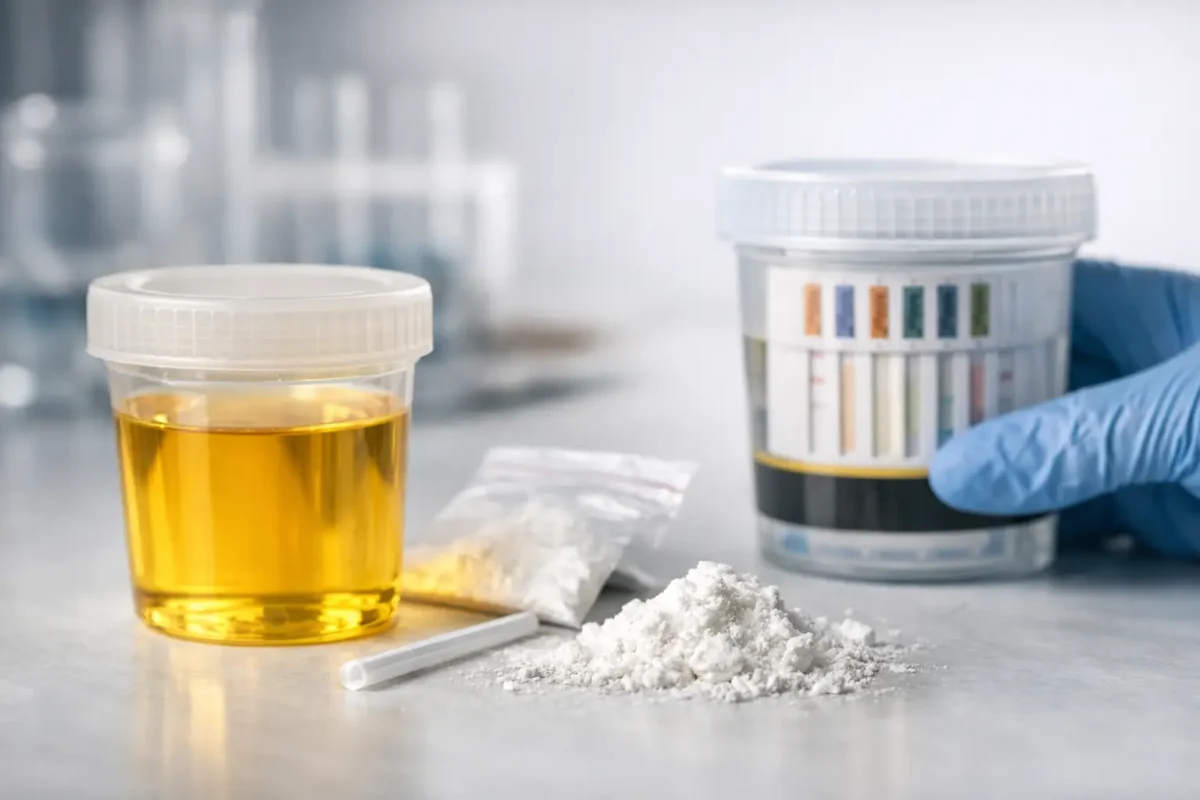
How long does cocaine stay in urine? For most occasional users, urine tests may detect cocaine metabolites for roughly 2 to 4 days, while frequent or heavy use can extend that window to a week or longer. There is no reliable shortcut that guarantees a negative test.
Key Takeaways
- Urine tests usually look for benzoylecgonine, the main cocaine metabolite, not cocaine itself.
- A single use may be detectable for about 2 to 4 days; repeated heavy use may remain detectable for 7 to 10 days or occasionally longer.
- Hydration, body size, dose, frequency, liver and kidney function, and the test cutoff all affect results.
- Detox drinks, excessive water, and internet “cleanses” are not dependable and can create invalid or diluted samples.
Image brief: Horizontal compressed JPEG under 100KB showing a simple urine-test detection timeline with 1-4 days for occasional use and 7+ days for frequent use.
How Long Does Cocaine Stay in Urine?
The practical answer is that cocaine itself leaves the body relatively quickly, but its metabolites stay behind longer. A standard urine screen commonly detects benzoylecgonine for 2 to 4 days after occasional use. That range is only an estimate, not a promise.
People who use cocaine repeatedly, use large amounts, or have slower elimination may test positive for 7 days or more. Some clinical reports show longer detection periods in chronic heavy-use situations. Testing method and laboratory cutoff levels also matter.
Typical Urine Detection Windows
| Pattern of use | Common urine detection estimate | What can change the result | |—|—:|—| | One-time or occasional use | 2-4 days | Dose, metabolism, test sensitivity | | Several uses in one week | 3-7 days | Frequency, hydration, body function | | Frequent or heavy use | 7-10+ days | Accumulation, chronic use, lab cutoff | | Cocaine with alcohol | Potentially longer | Cocaethylene may form and persist longer |
These are broad ranges, not a tool for timing a test. Bodies do not process drugs on a fixed schedule, and a result can vary substantially from one person to another.
Why Urine Tests Detect Metabolites
Cocaine is rapidly broken down after use. Laboratories generally test urine for benzoylecgonine because it remains present longer and is a more dependable marker of recent exposure.
That distinction matters. Feeling sober, sleeping well, or having no obvious effects does not mean metabolites are gone. Urine testing measures what the body has already processed and excreted, not whether a person currently feels impaired.
Screening Tests vs. Confirmation Tests
Many testing programs begin with an immunoassay screen. It is fast and designed to identify samples that may contain a drug metabolite above a stated cutoff.
A non-negative screen may be followed by confirmatory testing, often using more specific laboratory methods. Confirmation reduces the chance that another compound is mistaken for cocaine metabolites. A home test can offer a rough indication, but it cannot replace an employer, medical, legal, or laboratory result.
What Changes Cocaine Detection Time?
There is no universal detection window because elimination is personal. The biggest variables are not marketing claims or “detox” formulas. They are the amount used, how often it was used, and how the body processes it.
Frequency and Total Amount
More frequent use generally means a longer detection window. When use occurs repeatedly over several days, metabolites can accumulate faster than the body clears them. A single small exposure and daily use are not comparable situations.
Individual Metabolism
Age, genetics, liver health, kidney function, body composition, and overall health can influence processing and excretion. Faster metabolism may shorten a window somewhat, but it does not make testing predictable.
Alcohol Use
Combining cocaine with alcohol creates cocaethylene in the body. This combination raises health risks, including strain on the heart, and may complicate the detection picture. Mixing the two is not a safer way to use either substance.
Image brief: Horizontal compressed JPEG under 100KB with a clean comparison graphic: occasional use, repeated use, and cocaine plus alcohol, with clear risk labels.
Why Timing a Test Is Risky
Search results often promise exact answers, such as “clear cocaine in 24 hours.” That is sales language, not dependable medical guidance. Test results are shaped by the sample, the cutoff, the collection process, and individual biology.
Trying to calculate the last possible hour before a test can lead to poor decisions. A positive, diluted, or invalid result may have consequences in employment, treatment, probation, healthcare, or family settings. If a test has serious consequences, direct communication with the relevant program, clinician, attorney, or employer policy contact is more useful than relying on a countdown.
Can Water or Detox Drinks Clear Cocaine From Urine?
No product can reliably remove cocaine metabolites from urine on demand. Drinking extreme amounts of water does not speed up the body’s elimination process in a meaningful, predictable way. It can only dilute urine temporarily, and testing programs may flag samples that appear too dilute.
Avoid excessive water intake. It can be medically dangerous in severe cases. Detox kits, synthetic additives, and sample substitution also carry legal, medical, and administrative risks. The only dependable factor is time without further use.
A Quick Decision Quiz
Use this short check to choose the sensible next step:
- Is the concern a scheduled workplace, legal, medical, or treatment test?
- Yes: Do not rely on online timing charts or detox products. Review the official policy and seek qualified advice if the stakes are high.
- No: Continue to the next question.
- Has use been repeated within the past week?
- Yes: Assume the detection window may be longer than the 2-4 day estimate.
- No: A shorter window is possible, but no result is guaranteed.
- Is cocaine use becoming frequent, stressful, expensive, or hard to stop?
- Yes: Focus on support and health rather than test timing.
- No: Keep in mind that lower frequency does not eliminate cardiovascular or overdose risk.
Image brief: Horizontal compressed JPEG under 100KB showing a three-step decision flow: test stakes, frequency of use, and support options.
If You Are Concerned About a Test Result
Start with the facts: note the date of last use, whether use was isolated or repeated, and what type of test is involved. Do not take more substances in an attempt to manage anxiety or sleep before testing. Combining drugs can create new health risks and may complicate a medical evaluation.
If you use legal adult products in your area, keep your shopping decisions separate from test anxiety. At Global Marijuana Dispensary, the practical move is to compare product details and availability only when you are making a clear-headed, legal purchase decision – not as a reaction to a pending test or a health scare.
When to Get Medical Help
Seek emergency care immediately for chest pain, shortness of breath, fainting, seizures, severe agitation, confusion, overheating, or an irregular heartbeat after cocaine use. These symptoms can signal a serious medical emergency.
If stopping feels difficult, support is available through a doctor, substance-use counselor, local treatment provider, or a confidential support line. Asking for help is a practical step, especially when use is affecting work, finances, relationships, or sleep.
Image brief: Horizontal compressed JPEG under 100KB featuring a calm, high-contrast safety checklist: chest pain, breathing trouble, seizure, confusion, and call emergency services.
A Practical Next Step
Treat urine detection estimates as broad health information, not a guarantee or a workaround. Do not buy detox products expecting certainty, do not overhydrate, and do not mix cocaine with alcohol or other drugs to change the outcome. If your concern is recurring, choose the next action that protects your health and your future, whether that means pausing use, speaking with a clinician, or getting confidential support.